The Silence of Brutalism: Reevaluating Concrete Monoliths
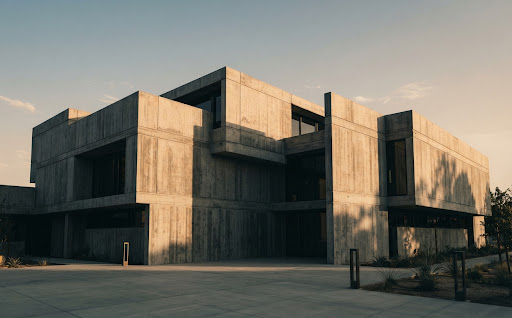
In an era obsessed with transparency and glass, the stoic permanence of brutalist structures is experiencing an unexpected renaissance among urban purists.
By Eleanor Vance12 Min ReadRead Article arrow_forward
Vol. IV
Horology
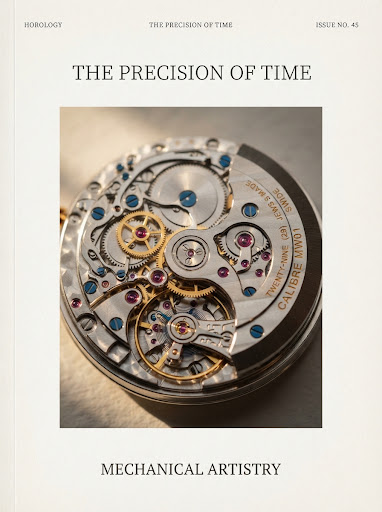
The Obsessive Art of Micro-Mechanics
Exploring the hidden world of master watchmakers who spend years assembling thousands of microscopic gears.
Gastronomy
Deconstructing the Tasting Menu
Has fine dining reached its logical conclusion, or is there still room for genuine innovation beyond tweezers?
Design Theory
Transparency as a Tool for Deception
How modern user interfaces use glassmorphism and blur to obscure rather than clarify digital intent.
Literature
The Death of the Private Library
As digital archives expand, the physical collection of bound volumes is becoming an endangered aesthetic ritual.
Visual Anthology
Latest Dispatches
Explore our complete catalog of explorations into culture, technology, and spatial design.
Design
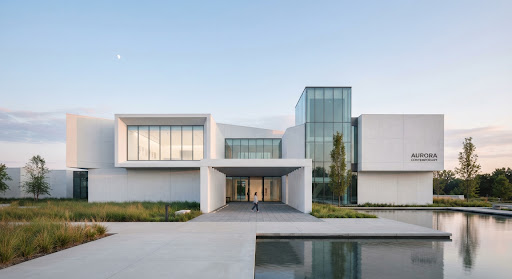
The Resurgence of Brutalism in Modern Spaces
Elena Rostova• Oct 2024
Tech
Decluttering the Digital Workspace
Marcus Chen• Oct 2024
Culture
Culinary Minimalism: Less is More
Sarah Jenkins• Oct 2024
Lifestyle
Finding Stillness in Remote Landscapes
David Aris• Sep 2024
Horology
The Enduring Appeal of Mechanical Timepieces
James Thorne• Sep 2024
ArchitectureEssay
The Geometry of Silence: Space as an Active Element
Elias Thorne
Kyoto • October 24, 2024
schedule8 Min Read
"In modern design, empty space is rarely truly empty. It is a calculated volume, a structured void that dictates how we move, breathe, and perceive the solid forms around us."
The architectural principle of negative space extends far beyond mere aesthetic minimalism. When we construct a room with vast, unadorned walls and sparse furnishings, we are not simply omitting detail; we are amplifying the presence of what remains. This concept, rooted deeply in traditional Eastern philosophy, treats the void not as a lack, but as an entity possessing its own inherent mass and gravity.
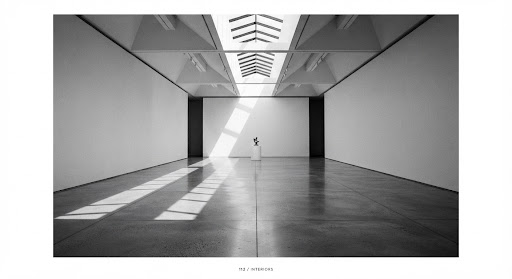
Consider the spaces between structural columns in a modernist pavilion. The light that filters through these gaps, the shadows that trace their daily arc across the polished floor—these are active participants in the architectural narrative. They dictate the rhythm of our steps and the focus of our gaze.
"We shape our buildings; thereafter they shape us. But it is the space within them that truly holds our shape."
This spatial tension is perhaps most palpable in environments designed for contemplation. Galleries, libraries, and places of worship often employ immense vertical volume to enforce a sense of scale that humbles the individual. The physical distance between the viewer and the ceiling translates directly into psychological distance from the mundane.
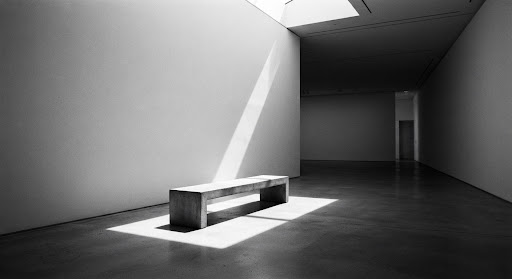
Fig 1. Intersection of natural light and raw concrete at Naoshima.
The Weight of the Unseen
To design with emptiness requires a fundamental shift in perception. The architect must cease focusing solely on the material—the concrete, glass, and steel—and begin to sculpt the invisible air between these elements. It is an exercise in restraint, a commitment to the belief that silence can be more profound than noise.
When successful, this approach yields environments that feel profoundly still. They offer a refuge from the visual cacophony of the contemporary world, providing a blank canvas upon which the mind can project its own thoughts. In this context, minimalist architecture is not merely a style; it is an act of psychological curation, filtering out the extraneous to reveal the essential.
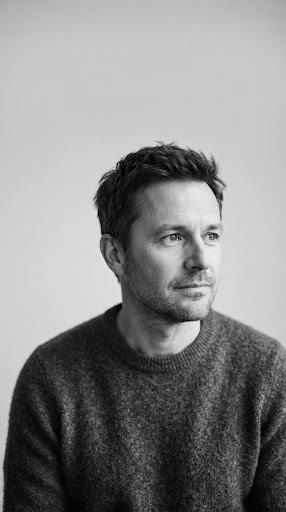
Elias is an architectural critic, essayist, and visiting lecturer in spatial theory at Kyoto University. His writings explore the psychological impact of built environments.